Hi! Welcome...

SFMTA’s Central Subway will connect San Francisco’s southeast neighborhoods to downtown and Chinatown. Whether you’re a concerned citizen, business owner, Muni customer, or just stumbled onto our blog, we welcome your questions and encourage you to connect with us. Follow us for the latest Central Subway news and information.

14 July 2010 ~ Comments

Public Art Proposals: CTS

Which are your favorite proposals? We want to hear from you! This is the last preview of the San Francisco Arts Commission (SFAC) artist proposals for the “landmark” and “wayfinding” designs for Chinatown (CTS) Station. The public comment period will end on Friday, July 16, 2010, so we hope you will take the time to pay a visit and give the SFAC’s Public Art Program your feedback! For the viewing of the actual proposals, please visit the exhibit location at the following address:

Chinese Cultural Center
750 Kearny Street
Operating hours: Tuesday – Saturday, 10 a.m. – 4 p.m.

 The following are the artist proposals displayed for the CTS station:

Landmark Proposals

Gold Mountain Sequoias (金山青松)

Gold Mountain Sequoias (金山青松)

Artist: Ming Fay
Title: Gold Mountain Sequoias (金山青松)
“Staged at the first landing of the subway escalators, the mural welcomes visitors as they ride the escalator down into the station, reminding them of the natural beauty that surrounds their urban environment and an important historical time in California’s history. The escalator trip towards the mural allows the viewer to engage the mural and be drawn into the illusive quality of the mosaic’s colored glass pieces. Measuring approximately 14’h x 40’w, the wall of the mosaic feels like a section in a long scroll, allowing the viewers to experience the piece as they move across the platform into and out of the station.  The mosaic’s vibrant colors will definitely light up the subterranean space.”


Yang Ge Dance of Northeast China

Yang Ge Dance of Northeast China

Artist: Yumei Hou
Title: Yang Ge Dance of Northeast China
The mural on the arch wall depicts some of the more popular dances, such as the well known folk tale of the Monkey King, the tale of the White Snake, the story of the four monsters, and pictures of daily life such as a couple’s harmony, wife visiting her family, dancing crowns, young and elderly ladies.  The arch trimming in red tells the tale of Manchurians driving evils out, and the part in green tells of the celebration of one’s 60th birthday.”

An Ocean to Cross/A Land to Build

An Ocean to Cross/A Land to Build

Artist: May Sun
Title: An Ocean to Cross/A Land to Build
“The focal point on the wall is a long photographic panorama of vintage photos of Chinatown taken by German immigrant photographer Arnold Genthe at the turn of the century. The images show street life – men gathering around a letter writer, pedestrians, vegetable sellers and other workers as well as a Chinese typesetting facility.  Above the long panoramic photo panel is a group photo of revolutionary leader Sun Yat-sen, founder of the Chinese Republic, taken with his supporters in San Francisco.  A fugitive on the run, he traveled to California to raise funds from the overseas Chinese for his cause – to overthrow the corrupt Manchu Dynasty in China.  The Chinese in San Francisco were instrumental in its success.”


Wayfinding Proposals


The Chinese Underground Garden

The Chinese Underground Garden

Artists: Carl Cheng
Title: The Chinese Underground Garden

“Three elements of Chinese gardens will be used throughout the station to provide continuity to the cultural community: the moon gate, the window lattice grill designs and the natural vistas, all inspired by the Tang and Sung Dynasty.  The artist will take images of contemporary garden vistas, fruits and vegetables displayed in the local shops and combine them into original artworks to be constructed into the window boxes. Contemporary shadow outlines and silhouette patterns will be used in fabricating the grill designs.”


Urban Archaeology

Urban Archaeology

Artist: Tomei Arai
Title: Urban Archaeology
“In this urban narrative, passengers will be presented with a visual timeline that begins with contemporary images of the Chinatown community at the subway entrance and ends on the Platform Level with life before the city was founded.  Moving from level to level, passengers will be invited to experience the artwork in much the same way as archeologists sift through layers of history to discover clues about the past.”


The Garden

The Garden

Artists: Yun-Fei Ji
Title: The Garden
“For this project, I will use the Chinese hand scroll as my point of departure. I envision a contiguous scroll that wends its way through the three levels of the subway station, with occasional breaks, as dictated by the architecture.
The subject of the scroll will be the building of a classical Chinese garden, an ideal place of harmony and fulfillment that reflects the dreams and desires of the community. This garden will be populated with contemporary Chinese Americans, young and old, going about their everyday business of working, playing and socializing, as they do in Chinatown’s parks. These characters will be approximately 14 inches tall and will be situated at eye level.”

Inception, Confluence and Flow

Inception, Confluence and Flow

Artists: Faye Zhang
Title: Inception, Confluence and Flow
“In this series of works, I play with the varying forms and movement of water. My initial inspiration for these pieces came from the unifying quality of water. Not only is San Francisco nestled by the Bay, but early immigrants traveled thousands of miles on waterways, coming together and settling down to make communities within the city. The powerful and beautiful motion of water truly connects us all.”

For more in-depth proposal information and images please visit the display at the Chinese Cultural Center or visit the San Francisco Arts Commission Web site and email your comments on the proposal to Zoe Taleporos, Program Associate (zoe.taleporos@sfgov.org).

  • Share/Bookmark

13 July 2010 ~ Comments

Public Art Proposals: MOS

Here are perfect bite size samples from the San Francisco Arts Commission (SFAC) of the “landmark” and “wayfinding” artist proposals for Moscone (MOS) Station. The public comment period will end on Friday, July 16, 2010, so we hope you will take the time to pay a visit and give the SFAC’s Public Art Program your feedback! For the viewing of the actual proposals, please visit the exhibit location at the following address:

 Contemporary Jewish Museum
736 Mission Street
Operating hours: Monday-Tuesday, 11 a.m. – 5 p.m.;
Wednesday, closed; Thursday, 1-8 p.m.;
Friday-Sunday, 11 a.m. – 5 p.m.

 The following are the artist proposals displayed for the MOS station:

 Landmark Proposals

(Untitled)

(Untitled)

Artist: Brian Tolle
Title: (Untitled)
“Passengers ebb and flow through train stations, not unlike the fog that rolls in and out of San Francisco each morning and night. I propose the creation of landmark artworks that celebrate these phenomena. Using computer generated models and state of the art CNC router technologies, molds will be generated to create unique works that depict single moments of a surface seemingly in motion. The works proposed will be cast in translucent fiberglass.”

Flocking

Flocking

Artist: Joyce Hsu
Title: Flocking
“The average commuter may spend up to five hours a week in a transit station for their daily migration. For me, these spaces are hardly inspiring of dreams. But what if commuters were presented with a flock of jet-pack flying devices (ornithopters) with bird-like wings against the backdrop of a dreamlike sky? The artwork would be the embodiment of both the imaginative (flying) and natural landscape (marshland) into the constructed environment (station). It will become a strong icon for the station, offering commuters a reminder of their dreams and an opportunity to dissect that eternal problem up close. The installation will be aesthetically intriguing, and become synonymous with the vibrancy of South of Market.”

Arc Cycle (working title)

Arc Cycle (working title)

Artist: Catherine Wagner
Title: Arc Cycle (working title)
“In the late 1970s I photographed  the beginning of the construction of the Moscone Center. My interest was not in the convention center as it stands today, rather it was the process of construction that speaks to the idea of change, a common denominator in all of our lives.  For the new Moscone Central Subway Station, I propose to transform images from the series George Moscone Site into large-scale photographic drawings that are seen as sculptural reliefs.  These would span the concourse wall from the turnstiles to the elevator shaft (concourse end, concourse side wall).  The images of the Moscone Center construction in process would be sandblasted and laser etched onto a grey stone or metal panel that would be set, slightly recessed, into the wall.  Having the opportunity to transcribe this imagery onto the subterranean façade, close to the site of their creation would highlight the cyclical nature of dynamic urban change.”

Wayfinding Proposals

(Untitled)

(Untitled)

 Artists: Tom Otterness
Title: (Untitled)
“My initial ideas show the movement of life from above ground to the track level – using figures and buildings that are a cross between early constructivist abstraction and simple children’s building blocks. People are represented by four essential geometric forms: the sphere, the cone, the cube and the cylinder.  These abstract concepts can symbolize differences in race, class, culture and gender. The project will demonstrate the intermingling of all these different people on the platform of the subway, commuting to work, shopping with their families, carrying things here and there, and tourists with cameras on the way to museums. Like the city, the subway is a place where all types are welcome, where everyone converges and everyone is on equal footing.”


Untitled

Untitled

Artist: Mildred Howard
Title: Untitled
“Waiting for a train to arrive, you may daydream of people or events that happened at this site in the past or even some you just saw last week. Subway stations are an allegory of modern life, with movement, fleeting glimpses of people and random relationships, mysteriously acceptable. To capture these ideas and help people navigate through the space, I would install related art pieces at all three levels of the station, as if leaving bread crumbs as clues to find your way to and from a particular place. This method would incorporate an art piece repeated in different shapes and locations within the station. This led me to the idea of the grid of glass at various locations that reveals imagery, telling the rich history of the site and the diversity of people who use the station. It conveys the mystery of the experience of walking down into the earth to catch a train that will disappear into a black hole while I am on it!”

Radiant Rays

Radiant Rays

 Artist: Michele Oka Doner
Title: Radiant Rays
“Monolithic concrete, the primary construction material of the station, is by far the most potent factor to consider when responding to the mission statement. With this in mind I propose a work of art based on light.

Beginning with the glass curtain wall of the head house an expanding radiant pattern, evoking the sun’s rays, will dominate the entrance. This radial motion is designed with an actual vanishing point in mind. It establishes palpable tension in the visual surface of the head house glass wall, and serves to extend the sense of space to an imagined plane.

The lines themselves will be sandblasted into the glass curtain wall and tipped lightly with gold leaf, adding a high note of brilliance to the site.”

For more in-depth proposal information and images please visit the display at the Contemporary Jewish Art Museum or visit the San Francisco Arts Commission Web site and email your comments on the proposal to Zoe Taleporos, Program Associate (zoe.taleporos@sfgov.org).

  • Share/Bookmark

12 July 2010 ~ Comments

Public Art Proposals: UMS

The San Francisco Arts Commission(SFAC) in conjunction with the SFMTA’s Central Subway Project has opened the station artwork exhibits in the future station areas of Chinatown, Union Square/Market Street (UMS) and Moscone. These displays contain the conceptual drawings and ideas of the nineteen finalists for the “landmark” and “wayfinding” station art designs. We want you to be part of this process; therefore, we encourage the public to view these amazing concepts and to comment on them. The public comment period will end on Friday, July 16, 2010, so we hope you will take the time to pay a visit and give the SFAC’s Public Art Program your feedback!

To help whet your curiosity, we wanted to show you a small preview and description of the artist concepts on display for the UMS station. For the viewing of the actual proposals, please visit the exhibit location at the following address:

 Weinstein Gallery
291 Geary Street, 2nd Floor
Operating hours: 10 a.m. to 6 p.m. daily

 The following are the artist proposals displayed for the UMS station:

 Landmark Proposals

SiO2 (Alma's Folly)

SiO2 (Alma's Folly)

Artist: Brian Goggin
Title: SiO2 (Alma’s Folly)
“SiO2 (Alma’s Folly) is a site-specific sculpture that shelters the entrance to Union Square’s Central Subway station. The uppermost portion takes the form of the Silicon Dioxide molecule in an open matrix of steel bars, colored stainless steel orbs, and three streetlamp fixtures which all seem to rest on a frosted glass ceiling. The structure appears to be supported by inverted vintage streetlamp posts set at oblique angles as if they are in motion. Steel bands which echo the profile of the lampposts are set rhythmically in between, carving out an interior space. The lamps, separated from their poles, hang within the molecular matrix and illuminate at night, making the orbs shimmer. SiO2 features lampposts like those from around Union Square, putting this sculpture in perpetual dialogue with its site.”

They Are Looking Down

They Are Looking Down

Artist: Ilya and Emilia Kabakov
Title: They Are Looking Down
“Pedestrians traversing the long concourse in the Union Square/Market Street Station will be startled as they hurry across two mysterious white squares in the floor under their feet. A group of playful boys appear to be leaning over the edge of one of the squares looking up at the passengers with interest and amusement, as though from the other side of the world. What do they think of us? The other large white square depicts the children peering down into an empty square, seemingly transfixed on something far below that we cannot see. What are they looking at? The pedestrians experience being both outsiders, looking down into the white space over the heads of the children, and insiders, being looked at by the children as they hurry to their many destinations.”


Lucy in the Sky

Lucy in the Sky

Artist: Erwin Redl
Title: Lucy in the Sky
“The ceiling’s long span is covered with hundreds of proprietary, translucent 10 x 10 inch “light pixels” aligned in a diamond grid. The distance between the light pixels is about six feet measured along the diagonal grid lines. Each light pixel consists of a framed, clear, ½ inch acrylic panel. Each acrylic panel has an 8 by 8 grid of surface holes on both sides. The holes are lit up by RGB-LEDs embedded in the metal frame. The individual light units are computer-controlled and display simple patterns and animations. A vexing scenario unfolds throughout the space’s volume while individual light pixels slowly change color in synch, rendering space a palpable experience. Individual pixels, transparent or lit up, aligned behind each other or seen individually, offer an ever-changing and dazzling spectacle for the viewers.”


Wayfinding Proposals


Union Arcade

Union Arcade

Artists: Michael Davis and Susan Schwartzenberg
Title: Union Arcade

 “Union Arcade is an environment of light features, and pattern inlays traveling along the mezzanine and platform levels, designed to celebrate Union Square and its history. By their sequential features these artworks will draw people through the passageway and down to the platform, while suggesting the world above.”


Passing Time

Passing Time

Artist: Keith Godard
Title: Passing Time
“I imagine a passenger entering the concourse and descending to the platform, beginning his/her journey guided by a series of plaques representing either vertical or lateral ‘portholes in time’ covering certain years from over three centuries. The pieces would be smooth non-slip flat embedded into the station floors. A consideration for the wall installations could be rendered in low relief. As the traveler walks through the station’s concourse, the plaques progress from past to present until the viewer arrives at their destination of Union Square.  In the reverse direction, the visual process begins in the modern era so the commuter metaphorically walks back in time toward Market Street.”


Reflected Loop

Reflected Loop

Artists: Jim Campbell and Werner Klotz
Title: Reflected Loop
“Reflected Loop is a site-specific installation that circumscribes the entire concourse and platform levels above the pedestrian walkways, creating a unifying circuit of light and ambient reflections throughout the station. The band winds its way down one escalator shaft, spans the entire platform level, winds its way back up through the opposing escalator shaft,  and then runs the entire concourse level to reconnect with itself. The installation is a loop that has no beginning or end.”

 For more in-depth proposal information and images please visit the display at the Weinstein Gallery or visit the San Francisco Arts Commission Web site and give your comments on the proposal. Comments at the San Francisco Arts Commission Website must be posted to:

Zoe Taleporos, Program Associate
zoe.taleporos@sfgov.org

  • Share/Bookmark

09 July 2010 ~ Comments

Recap of Water Main Line

Here’s an update from this morning’s incident at the construction site at Fourth and Bryant streets. A water main line broke at Fourth and Bryant streets sending a geyser of water shooting 30 feet up in the air.

As of 2:15pm, repairs on the water main line have been completed and water service is back on.

At approximately 9:00am while Synergy was working to remove asphalt at the corner of Fourth and Bryant streets to relocate underground utilities, a 2ft x 2ft piece of concrete slipped through the jaws of a backhoe and landed on top of a water main line causing a 1 foot wide hole in the pipe. As a result, the water on Fourth Street between Bryant and Brannan streets had to be shut off in order to repair the broken pipe.

Thanks to the SFPUC, SFPD, CHP, SFFD and DPW for assisting with the situation and controlling traffic flow.

2ft x 2ft piece of concrete

2ft x 2ft piece of concrete

1 foot wide hole

1 foot wide hole

4th and bryant11

Making repairs on the broken water main

  • Share/Bookmark

02 July 2010 ~ Comments

Public Art Proposal Display from July 9-16

SFAC_Centr_Sub_bg_vertCongratulations to the 19 prominent national and local artists and artists teams competing for the Central Subway Public Art Program. Proposals for two permanent public artwork opportunities each at the Chinatown, Union Square/Market Street and Moscone Stations will be on view at the Chinese Culture Center, Contemporary Jewish Museum and Weinstein Gallery from July 9 through July 16.

For the Chinatown Station landmark artwork, artist Ming Fay developed a proposal of a large colorful glass mosaic that draws inspiration from the evergreen pine forests of California and the Gold Mountains in the Bay Area. Yu Mei Hou’s landmark design proposal incorporates traditional Chinese paper cut art based on traditional Chinese folk tales, and May Sun’s proposal consists of a large wall artwork incorporating both archival and current photographs of Chinatown, with insets in the adjacent floor area. For the wayfinding artwork, Carl Cheng’s proposal will take transit riders on a walk through an underground Chinese garden. Using architectural glass elements, Tomie Arai will create a site-specific visual narrative about the history of the area surrounding the subway station. As riders move through the different layers of the station, they will be able to experience this narrative in much the same way as an archeologist might sift through layers of history to uncover the past. Yunfei Ji’s wayfinding proposal is based on the Chinese hand scroll that will weave its way through the station telling the story of Chinese-American’s participation in the building of America. Lastly, Faye Zhang proposes a series of mosaics on several level that reference moving water, as passengers move through the station.

At the Union Square/Market Street Station the candidates for the landmark artwork include Brian Goggin whose design consists of a glittering canopy of metal and glass inspired by the sand dunes that once were in the Union Square location. Ilya and Emilia Kabakov’s landmark proposal children gazing down at a hidden world located somewhere below the floor. The final candidate for the Union Square/Market Street Station landmark artwork is Erwin Redl. Inspired by the famous Beatles song “Lucy in the Sky with Diamonds,” Redl proposes a ceiling grid of hanging 10” x 10” “light pixels” with shifting colors in a diamond shape pattern. For the wayfinding artwork, Michael Davis and Susan Schwartzenberg’s proposal includes overhead lighting with imagery of large-scale historic gatherings in Union Square and a series of artifacts imbedded in the walls that reveal little known historical stories from the downtown area. Keith Godard’s proposes floor mosaics depicting historic bird’s eye views of Union Square beginning in 1776 and continuing to the present day. The artist team Jim Campbell and Werner Klotz propose to create an undulating three-dimensional ribbon that spans the length of two station levels.

For the Moscone Station landmark artwork Brian Tolle’s proposal draws a parallel between the ebb and flow of passengers in the train stations and San Francisco’s famous fog. Using state of the art technologies, he will create molded panels that depict single moments of a surface seemingly in motion. Joyce Hsu’s landmark proposal combines concepts based on San Francisco’s estuarine system as a bird refuge with mankind’s drive to look towards the sky for better mobility. Her design presents commuters with a flock of jet-packed flying devices with bird-like wings against a backdrop of a dreamlike sky. Catherine Wagner’s design incorporates large photographs she took in the late 70s documenting the construction of Moscone Center. For the wayfinding artwork, Tom Otterness has proposed a series of humorous sculptural vignettes featuring his signature bronze characters as transit riders place throughout the station. Mildred Howard’s wayfinding artwork proposal consists of laminated glass panels featuring archival images that appear and disappear as passengers walk past them and that are intended to take transit-users on a journey through time. Michele Oka Doner is proposing a multi-level series of floor insets, elevator designs, and sculptural elements that reference sunlight and other natural phenomena.

We hope to see you at the public art viewing!

Exhibition Locations and Operating Hours:

Central Subway Public Art Program Manager Judy Moran will be available to answer questions from the public at a Q & A session at each of the three proposal display sites, see below for more details.

Chinatown Station
Chinese Cultural Center
750 Kearny Street
Operating hours: Tuesday – Saturday, 10 a.m. – 4 p.m.
Q&A with Project Manager Judy Moran: Saturday, July 10 from noon to 2 p.m. on the Pedestrian Bridge that crosses Kearny Street from Portsmouth Square to the Chinese Culture Center in the Hilton Hotel.

Union Square/Market Street Station
Weinstein Gallery
291 Geary Street, 2nd Floor
Operating hours: 10 a.m. to 6 p.m. daily
Q&A with Project Manager Judy Moran, Monday, July 12 from noon to 2 p.m.

Moscone Station
Contemporary Jewish Museum
736 Mission Street
Operating hours: Monday-Tuesday, 11 a.m. – 5 p.m.; Wednesday, closed; Thursday, 1-8 p.m.; Friday-Sunday, 11 a.m. – 5 p.m.
Q&A with Project Manager Judy Moran: Tuesday, July 13 from noon – 2 p.m.

  • Share/Bookmark

21 June 2010 ~ Comments

Building Communities With Transit

As everyone is well aware – especially friends visiting from out of town – San Francisco is hilly.  The steep hills limited the growth of the City during the early days.  The main mode of transportation was literal horse power and very few streets were paved in the city. This led to the majority of the population settling down in south of Market Street area; whereas, the only people who were able to settle in the hills were the wealthy who were able to afford vehicles to carry everything they need up the steep grades.  The Cable Car and electric streetcars were introduced which revolutionized transportation in San Francisco.  Areas believed to be completely unattainable by the average citizen, were now available and encouraged the City’s growth over or under the hills and out to the sands of Ocean Beach.  

Technology helped San Francisco overcome limits to the City expansion. Speculators, planners, and engineers would soon capitalize on these improvements and build the City into what we see today.  In 1918, construction of the Twin Peaks tunnel was completed and linked the western and eastern neighborhoods by rail.  Fernando Nelson, the man responsible for much of the development now known as “West Portal” (see video below), saw the value of this rail line and began developments along the rail lines that were being built in the Sunset to capitalize on the real estate boom.

Transit has been a motivator for redeveloping the City’s landscape and can also be a valuable investment in community.  A study conducted by Jeffrey M. Casello and Clarence Woudsma of the University of Waterloo, illustrated the impact of transit on land use following the introduction of a new bus and subway services in a developing communities around Ontario, Canada.  The study followed the property values of communities along an express bus route and subway line.  All of the properties were calculated and assessed against a control region and proximity to the systems. The analysis found that property values along both the express bus and subway line saw increases compared to areas without transit investment.  More importantly the greatest gains on property value were found adjacent to rail.  From the study, both transit systems helped increase property value and develop their respective communities.  Yet, why was the rail system more impactful?  It boils down to permanence.  Casello and Woudsma concluded that people as a whole are more attracted to something that is permanent which creates perceived value.  Many studies have proven this trend within the transit community and major cities have taken notice.  The investment in rail lines in communities is more than just a psychological factor but is a basis for community investment as well.

 Check out this amazing film footage!

Twins Peaks Tunnel Construction and Opening, 1917.

Courtesy of the Prelinger Archive

For more amazing heritage films of San Francisco, check out the Prelinger Archive at Archive.org.

  • Share/Bookmark

11 June 2010 ~ Comments

Everything Old is Made New Again

Public transit is nothing new. The vehicles and modes may have changed, yet the idea is still the same. Transit gets the person from point A to point B and every other letter after that. Ideas thought to be antiquated and out-of-touch has begun to reemerge because their usefulness is being recognized by a new generation. This practice of historical recycling can also be seen within the public transit of San Francisco.

San Francisco Cable Cars, 1870s. <strong>Photo: San Francisco History Center, San Francisco Public Library</strong>
San Francisco Cable Cars, 1870s. Photo: San Francisco History Center, San Francisco Public Library

A person can be truly amazed at how big San Francisco’s transit system was at one point in the city. Cable cars – the iconic symbol of San Francisco – was invented by Andrew Hallidie and made its debut in 1873 on Clay Street. Hallidie designed the original cable car specifically for the hilly terrain that is inherent to San Francisco. Ten years after the first test run on Clay Street, cables cars could be seen running along Sutter, Geary, Market, Ellis, O’Farrell, Post, Powell, Sacramento, Washington, Jackson and Union Streets. The cable car began to be replaced by more transit efficient electric trolley cars in the late 1880s. San Francisco leaders never completely removed the cable cars because of the great love that the people of San Francisco had for them.

Market Street Railway Service Map, 1931.
Market Street Railway Map, 1931. Original map published by the W.C. Eubank Company

In the 1901 San Francisco transit statistics, there were 234 miles of track and 166 miles of overhead trolley line with 376 cable cars and 414 trolley cars in active service. Also in service, were 10 horse cars and 65 steam dummy cars that helped the cable and trolley cars accommodate the population of 342,782 people.  Growth of transit continued in San Francisco with system lines that extended as far south as the City of San Mateo. From 1921 to 1944, most of San Francisco’s streetcar system was operated by the Market Street Railway.  World War II brought increased ridership along with a dramatic growth in revenue that lead to the City of San Francisco’s purchase of the Market Street Railway.  

With the advent of the personal automobile in society, there began to be a pulling away from light rail systems by both the city government and the public. Track systems that once sprawled throughout the city were either cutback or removed and replaced with bus lines or turned into roadways for automobiles. Today the transit community is moving to reclaim the auspicious heritage that was once in San Francisco. This will occur by building upon the remaining light rail lines that the San Francisco leaders had the good foresight to keep up and running.

Today there is a trend to provide transit environments that are both evolutionary as well as revolutionary. This can be seen in various transit projects across the United States as major cities have to adjust to growing populations and the need for better transit methods. Auto dependent cities such as Houston, Los Angeles and Phoenix have all realized the benefits of light rail. Even within San Francisco there is a move to expand transit operations as is seen with the Central Subway project and the rejuvenation of the Transbay Terminal. Technology in the present is able to improve upon the methods of the past by presenting options that were not available to our forefathers, such as advanced tunneling techniques and efficient electrical engineering. The progression of transit was just as vital back in the day as it is now and we are continually searching for ways and methods to make transit as accessible as it once was and will be.

Please check-in next week for our posting about the relationship between community development and public transit!

  • Share/Bookmark

21 May 2010 ~ Comments

CTC awards the Central Subway $27M

Synergy contractors working hard on site at Clementina location.

Synergy contractors working hard on site at Clementina location.

The Central Subway Project received great news this week! The project has been awarded $27 million in tunnel component funds from the California Transportation Commission (CTC).  These funds are awarded for the Central Subway’s future connection to the California High Speed Rail that is currently in planning.  The route of the High Speed Rail is to begin in Los Angeles with its Northern Terminus to be in San Francisco at the Transbay Terminal that is slated to begin construction in August 2010.  The Central Subway connection to the High Speed Rail will be at the prospective Brannan Street Station located at Fourth Street and Brannan, along the Central Subway alignment.  These funds will help with construction costs for the tunnel portion of the project and will also decrease the amount needed from local funding sources.

The following in italics is cited from the Muni proposal to the CTC:

San Francisco Municipal Transportation Agency (Muni) is proposing to program:

  • The tunnel component ($27 million) of its Central Subway light rail line that starts at the Caltrain (PCJPB) depot and goes north to Chinatown.  The Central Subway will be the first major north-south rail connection to the east-west BART/Muni subway at Market.

Muni is proposing to extend the connectivity of its system with the existing BART system, Caltrain system and the proposed high-speed system.  The connectivity should increase ridership and reduce travel times, similar to the benefits that would occur with the Los Angeles’ Regional Connector.  The tunnel component will permit Muni to begin the tunneling.

Commission staff recommends that the project be programmed.

Chairs and Commissioners, May 10, 2010


The Central Subway Project continues to press forward with growing support and progress. This awarding of funds is seen as a great accomplishment and is an affirmation of the Central Subway’s importance to the future of transit growth in the City of San Francisco.

*Correction: The transfer stations for the high-speed rail will be at the Fourth and King Stations. The Brannan Station will be the last surface station before the tunnel on the Central Subway phase.

  • Share/Bookmark

11 May 2010 ~ Comments

Geotechnical Drilling is on Schedule

Contrary to the Examiner article “Central Subway behind schedule,” dated 5/11/10 and written by Katie Worth, the Central Subway Project boring operation is not behind schedule.  The schedule for this segment, geotechnical drilling, of the project was rearranged to accommodate concurrent on-going utility relocation activities.  This is simply an example of contractors working together and modifying their schedules so that multiple jobs can take place at the same time without schedule delays.  This displays the professional coordination among contractors working on the project.  We expect to see more adjustments to facilitate parallel tasks throughout the project.  Furthermore, the geotechnical investigation phase has no bearing within the overall project schedule.

  • Share/Bookmark

07 May 2010 ~ Comments

Updated May 2010 Drilling Schedule

There have been changes to the drilling schedule!  Please read the following notice and the dates in red are the new scheduled days for drilling.

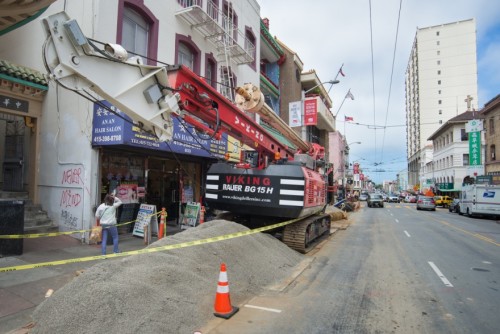
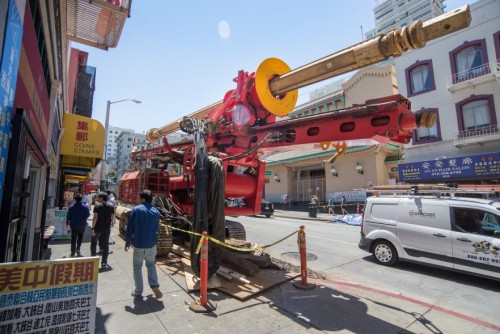
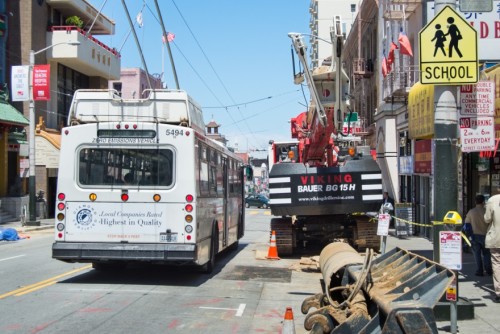
The San Francisco Municipal Transportation Agency and PB/Telamon with Treadwell & Rollo will continue drilling operations for supplemental geotechnical investigations; the purpose of which are to provide critical geotechnical and hydro-geologic information needed for final design and pre-construction of the proposed subway tunnel and associated structures.

Here’s the anticipated drilling schedule throughout the month of May:

  • May 13-14, 2010: Drilling will be on Stockton and Clay in Chinatown during the day.
  • May 17-20, 2010: Drilling will be on Stockton and O’Farrell (in front of Macy’s) during the day.
  • May 26-27, 2010: Drilling will be on 4th Street and Folsom on Folsom during the day.
  • May 24-25, 2010: Drilling will be on Stockton and Market (in front of Virgin) during the day.
  • May 15-16, 2010: Drilling will be on Stockton and Washington (near the school yard) during the day.

Updated as of May 10, 2010.

Here are some facts that you should be aware of:

  • Daytime working hours are between 7am-6pm. Evening working hours are from 9pm-5am.
  • Parking spaces will be temporarily closed as needed during drilling
  • Drilling will be performed using a truck-mounted drill rig, which will remain on the boring location for the duration of drilling
  • Please expect a minor increase in noise as a result of drilling

For further information or questions regarding the drilling, please contact Brajah Norris at 415.701.5263.

We apologize for any inconvenience that this may cause to you and are grateful for your understanding and cooperation during this work.

  • Share/Bookmark